Navigating Tax Season: Your Essential Guide to Getting & Declaring Your Informe de Rendimentos
As the new year dawns, a familiar anticipation settles in for millions of Brazilians: tax season. And at the heart of preparing your Imposto de Renda (IR) declaration lies a single, indispensable document: the informe de rendimentos. Often arriving in your inbox or digital banking portal like a timely alert, this crucial statement is your direct line to a smooth, compliant tax filing.
Far from just a piece of paper, your informe de rendimentos serves as a comprehensive summary of your financial activities over the past fiscal year. It's the official record that helps you communicate transparently with the Receita Federal, detailing everything from your employment earnings to your investment gains and the taxes already withheld. Without it, accurately declaring your income and avoiding the dreaded "malha fina" (tax scrutiny) becomes a significantly more challenging task.
This article will demystify the informe de rendimentos, breaking down what it is, why it's so vital, how to easily obtain yours, and how to effectively incorporate its data into your tax declaration. Prepare to simplify your journey through tax season!
What Exactly is an Informe de Rendimentos?
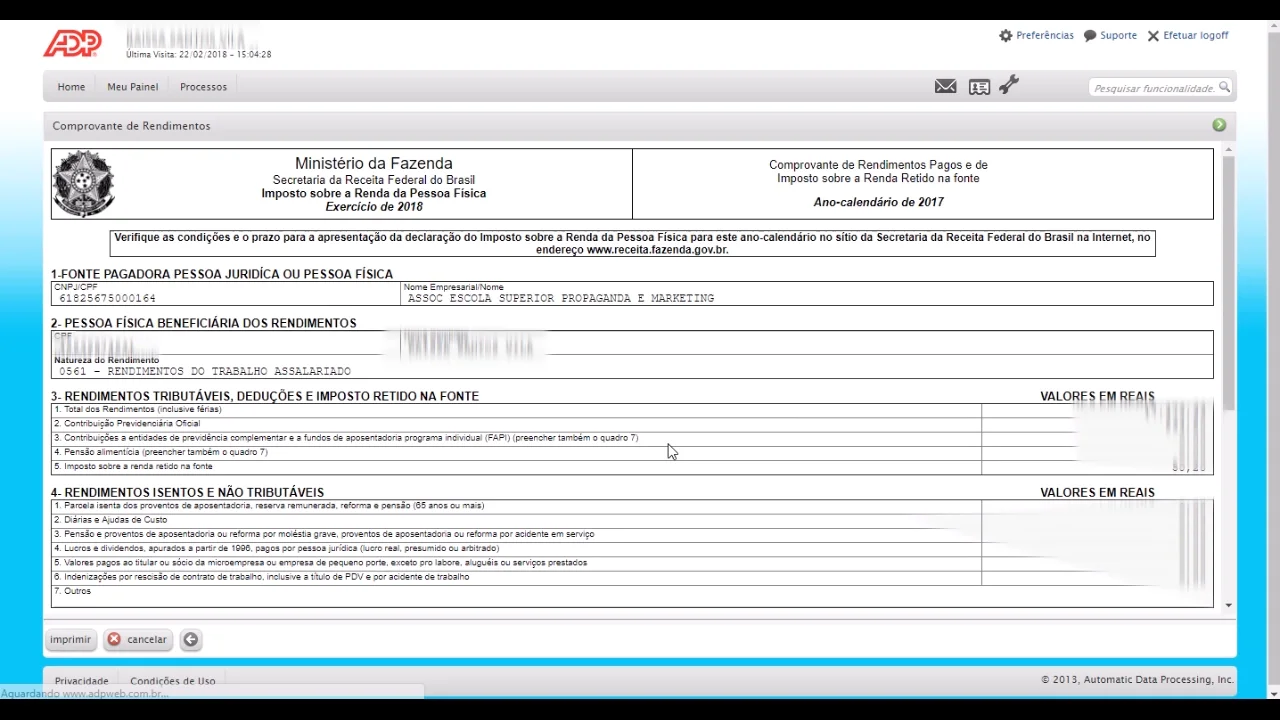
At its core, an informe de rendimentos is an official document issued by companies and financial institutions to individuals. Its primary purpose is to certify all income, deductions, and financial movements related to that individual during the preceding calendar year. Think of it as a detailed financial report card, meticulously prepared to meet the strict requirements of the Brazilian tax authority.
These documents are not one-size-fits-all; their content varies slightly depending on the source:
- From Employers: If you are a formal employee (CLT), your employer provides an informe de rendimentos detailing your gross salary, vacation pay, 13th salary (Christmas bonus), profit sharing (PLR), and any other forms of compensation. Crucially, it also itemizes mandatory deductions like Imposto de Renda Retido na Fonte (IRRF) and social security contributions (INSS), as well as any contributions to private pension plans offered by the company.
- From Financial Institutions: Banks, investment brokerages, and digital payment platforms (like the one mentioned in our reference) issue an informe de rendimentos that outlines your bank balance at year-end, interest earned, investment yields (e.g., from savings accounts, fixed income, or variable income), and any taxes withheld on these earnings.
- From INSS: For retirees and pensioners receiving benefits from the National Social Security Institute, the INSS itself issues an informe de rendimentos detailing their pension income.
In essence, if you earned income, held a bank account, or had investments during the year, you will likely receive one or more of these documents. They are the definitive proof of your financial journey, designed to provide the Receita Federal with a clear picture of your taxable capacity.
Why Your Informe de Rendimentos is So Crucial for Tax Declaration
The importance of your informe de rendimentos cannot be overstated. It's not merely a supporting document; it's the very foundation upon which your Imposto de Renda declaration is built. Here’s why:
- Accuracy and Compliance: The Receita Federal already possesses much of this data from the issuing entities. Your declaration must align precisely with the information provided in your informe de rendimentos. Any discrepancies, no matter how minor, can trigger a closer look by the tax authorities.
- Avoiding the "Malha Fina" (Tax Scrutiny): This is perhaps the most compelling reason. The "malha fina" refers to the rigorous review process where the Receita Federal identifies inconsistencies between a taxpayer's declaration and the information reported by third parties (like your employer or bank). An Informe de Rendimentos: Your Key to Avoiding Tax Scrutiny is to ensure every figure you report is directly verifiable by these official documents. Failing to do so is the quickest way to invite unwanted audits and potential penalties.
- Comprehensive Financial Overview: Beyond compliance, these documents offer you a clear snapshot of your financial year. They allow you to track your total earnings, understand how much tax was withheld, and see the performance of your investments. This insight can be invaluable for personal financial planning and budgeting for the upcoming year.
- Maximizing Deductions: Your informe will detail certain deductions, such as social security contributions and private pension contributions. Ensuring these are correctly reported can directly impact your tax liability, potentially leading to a larger refund or a smaller payment due.
In short, the informe de rendimentos is your shield against errors and your guide to responsible tax filing. It streamlines the process and gives you peace of mind, knowing your declaration is backed by verifiable data.
How to Effortlessly Obtain Your Informe de Rendimentos
Thankfully, obtaining your informe de rendimentos has become increasingly straightforward, with most institutions opting for digital distribution. These documents are typically made available at the beginning of each year, usually in January or February, well in advance of the Imposto de Renda deadline.
1. From Your Employer:
- Email: Many companies send the informe directly to your registered email address. Remember to check your spam or junk folder, as automated emails can sometimes end up there.
- Company Portal/HR System: Most modern companies provide an employee portal where you can securely access and download your informe. Log in with your credentials and look for sections related to payroll, tax documents, or HR resources.
- HR Department: If digital options aren't available or you encounter issues, your human resources department is the go-to contact for physical copies or assistance.
2. From Financial Institutions (Banks, Investment Firms, Digital Accounts):
- Online Banking/Mobile App: This is the most common method. Log in to your bank's website or mobile application. Look for sections like "Imposto de Renda," "Informes," "Comprovantes," or "Documentos." You'll usually find an option to download your informe de rendimentos in PDF format.
- Email: Similar to employers, some financial institutions may email the document to you directly.
- Physical Mail: While less common now, some institutions might still send a physical copy, especially if you haven't opted for digital-only statements.
3. From INSS (for Pensioners and Retirees):
- Meu INSS Portal/App: The easiest way for INSS beneficiaries is through the official "Meu INSS" website or mobile application. After logging in, search for "Extrato de Imposto de Renda" or "Informe de Rendimentos."
General Tips for Acquisition:
- Don't Wait Until the Last Minute: Begin collecting your informes as soon as they become available. This gives you ample time to resolve any issues or missing documents.
- Organize Digitally: Create a dedicated folder on your computer or cloud storage for all your tax documents. Rename files clearly (e.g., "InformeRendimentos_BancoXYZ_2023.pdf").
- Verify Authenticity: Always ensure you are accessing your documents through official channels (e.g., direct bank websites, company portals) to avoid phishing scams.
Declaring Your Informe de Rendimentos: Step-by-Step Guidance
Once you've gathered all your informe de rendimentos, the next step is to accurately transfer this information into your Imposto de Renda declaration software or online portal. The key here is precision and methodical data entry.
1. Download the Official Software:
First, download the official Imposto de Renda declaration program provided by the Receita Federal from their website. There's also an online declaration option for simpler cases.
2. Understand the Software Sections:
The declaration software is structured with specific sections that directly correspond to the types of information found in your informe de rendimentos. These typically include:
- Rendimentos Tributáveis Recebidos de Pessoa Jurídica: This is where you declare income from employers. Your employer's informe de rendimentos will have a section clearly labeled with total taxable income.
- Rendimentos Isentos e Não Tributáveis: This section is for income that is exempt from taxation (e.g., certain types of savings account interest, some profit sharing). Your financial institution informe will specify these amounts.
- Rendimentos Sujeitos à Tributação Exclusiva/Definitiva: This covers income that has already been taxed at the source and doesn't require further calculation (e.g., some investment yields). Again, your financial informe will detail these.
- Bens e Direitos: While not direct "rendimentos," your financial informe will provide your bank account balances as of December 31st of the previous year. This information is crucial for declaring your assets.
- Pagamentos Efetuados: This section is used to declare payments that qualify for deductions. While not always directly from the informe, information like private pension contributions (from your employer's informe) might be relevant here.
3. Transcribe Data Carefully:
Go through each informe de rendimentos one by one. For each document, locate the corresponding section in the Imposto de Renda declaration software and carefully input the figures. Pay close attention to:
- CNPJ of the Source: Every informe will list the CNPJ (National Registry of Legal Entities) of the issuing company or institution. This is essential for identifying the source of income in your declaration.
- Net vs. Gross Amounts: Ensure you're entering the correct figures – whether it's the gross income, the amount of tax withheld, or the net income.
- Year-End Balances: For financial institution informes, ensure the December 31st balance is accurately reflected in your "Bens e Direitos" section.
Remember, your Informe de Rendimentos: What It Is and Why It Matters for IR is the blueprint for your declaration. Treat it with the utmost care.
4. Double-Check Everything:
Before submitting your declaration, review every entry against your physical or digital informes. A small typo can lead to big headaches. If you have multiple informes, ensure all of them have been accounted for.
Conclusion
The informe de rendimentos is more than just a bureaucratic requirement; it's a powerful tool for financial transparency and compliance. By understanding its purpose, knowing where to find it, and meticulously using it for your Imposto de Renda declaration, you equip yourself to navigate tax season with confidence and ease. Take a proactive approach, gather your documents early, and give yourself the peace of mind that comes with a perfectly filed tax return. Your future self (and the Receita Federal) will thank you.